Corridor read
What is a Coral Reef?
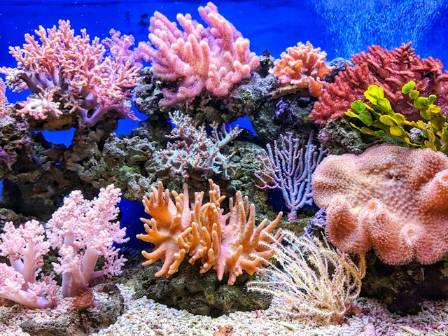
Coral reefs occupy only about 1% of the ocean floor, yet they provide a home for roughly a quarter of all marine species, which is why they are often called the “rainforests of the sea.” Beyond supporting incredible biodiversity, these ecosystems are essential for coastal communities around the world. They help reduce shoreline erosion, protect coastal areas from storm damage, and contribute billions of dollars each year through tourism, fisheries, and other economic activities.
Eveline Hart
Temple note
Layer tip
The full corridor digest continues below along soft meter ticks.
Path
Temple Corridor
Coral reefs occupy only about 1% of the ocean floor, yet they provide a home for roughly a quarter of all marine species, which is why they are often called the “rainforests of the sea.” Beyond supporting incredible biodiversity, these ecosystems are essential for coastal communities around the world. They help reduce shoreline erosion, protect coastal areas from storm damage, and contribute billions of dollars each year through tourism, fisheries, and other economic activities.
We spoke with Juan Torres-Pérez, a coral reef specialist and research scientist at NASA Ames Research Center, to learn more about the science behind coral reefs and why they are so important for both ocean ecosystems and human societies.
Understanding reefs, corals, and coral reefs
Reefs
A reef is a raised structure that extends above the surrounding ocean floor. It can be created naturally or formed through human activity. According to Torres-Pérez, reefs are defined by their ability to provide elevation and structure within the marine environment. A reef could be an artificial structure, such as a collection of submerged materials that become covered with marine life, or a natural formation like a rocky underwater mound.
Corals
Corals are marine animals belonging to the phylum Cnidaria and are commonly found in warm tropical waters. They are made up of hundreds or even thousands of tiny living creatures called polyps. Each polyp is only a few millimeters wide and contains a mouth surrounded by stinging tentacles that help capture food, including plankton and small marine organisms.
Over time, these polyps grow together and create colonies that people recognize as coral. Corals are generally divided into two main groups: hard corals and soft corals. Hard corals, also called stony corals, produce calcium carbonate skeletons that create the foundation of coral reefs. Soft corals, on the other hand, have flexible bodies and often resemble underwater trees, branches, or fans.
The bright colors associated with many corals come from microscopic algae known as zooxanthellae, which live inside coral tissues. These algae use sunlight to perform photosynthesis and provide much of the food and nutrients that corals need. Around 80 to 90 percent of the products created through photosynthesis are transferred to the coral, which is why corals usually thrive in shallow waters where sunlight can reach them.
Coral Reefs
A coral reef refers to the larger structure formed primarily by living hard corals. As Torres-Pérez explains, every coral reef is a reef, but not every reef is made of coral. The structure created by coral colonies becomes the foundation of an entire ecosystem that supports countless marine organisms.
The world’s largest coral reef system is Australia’s Great Barrier Reef. Stretching for more than 1,000 miles, it covers approximately 133,000 square miles and represents one of the most remarkable marine environments on Earth.
Why coral reefs are important
Healthy coral reefs provide many benefits, including protecting coastlines, creating habitats for marine species, and offering opportunities for scientific discoveries.
“Coral reef ecosystems provide habitats for thousands of species,” Torres-Pérez explains. These range from microscopic organisms such as bacteria and phytoplankton to larger animals including sharks, groupers, snappers, and sea turtles.
Coral reefs also serve as natural barriers during powerful storms such as hurricanes and typhoons. Their structures can absorb wave energy and reduce damage to coastal areas. However, as reefs have declined in recent decades, coastal flooding and erosion have become more severe in many regions.
Millions of people rely on coral reefs for food, employment, and economic stability, especially in island communities. These ecosystems support fisheries, tourism, recreation, and educational activities while providing important resources for local populations.
Scientists are also studying corals as potential sources of new medicines. Research has shown that certain chemicals found in coral can be developed into antibiotics capable of fighting bacteria that resist traditional treatments. Scientists can reproduce these compounds in laboratories, reducing the need to collect and damage living coral colonies.
Current threats facing coral reefs
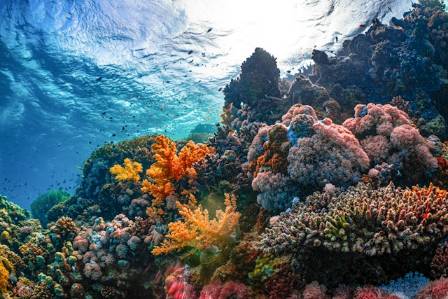
A report from the Global Coral Reef Monitoring Network found that approximately 14% of the world’s coral reefs disappeared between 2009 and 2018. Following the widespread coral bleaching event of 2023–2024, scientists expect these losses to continue increasing.
One of the greatest threats to coral reefs is rising ocean temperature. When seawater becomes too warm, corals experience stress and release their zooxanthellae, leaving behind a pale white skeleton. Without these algae, corals lose their primary food source and become vulnerable. Over time, weakened corals may be overtaken by fast-growing algae, eventually causing entire colonies to die.
Human activities also create serious challenges for coral ecosystems. Pollution, coastal development, and physical damage can all harm reefs. Increased sediment runoff from activities such as deforestation and poor land management can cover reefs with fine particles of mud and sand. This reduces water clarity, blocks sunlight, and limits the ability of zooxanthellae to perform photosynthesis.
Another major problem is eutrophication, which occurs when excessive nutrients enter marine environments. These nutrients often come from sewage discharge or agricultural fertilizers carried into the ocean through runoff. The extra nutrients encourage rapid growth of filamentous algae, which can spread across reefs and compete with corals for space and resources.
Physical destruction is another concern. Ship anchors can break coral structures, and certain fishing practices, such as deep-sea trawling, can tear corals away from the seafloor. Even small-scale human actions, including stepping on coral or leaving trash behind near beaches, can cause lasting damage.
Protecting coral reefs through science and conservation
Many coral reefs around the world remain poorly studied or completely unexplored. NASA’s NeMO-Net project aims to improve understanding of these ecosystems by combining citizen science with advanced technology.
Torres-Pérez, who serves as a co-investigator for NeMO-Net, describes the project as an interactive platform that allows people to identify coral species and reef features using two-dimensional and three-dimensional images. The information collected by users is processed through machine learning systems, helping NASA classify reefs and evaluate their condition worldwide.
In addition to research efforts, education plays an important role in coral conservation. In 2022, Torres-Pérez created OCEANOS, a program designed to introduce ocean science and STEM opportunities to Hispanic and Latino students in Puerto Rico.
Through OCEANOS, students participate in activities such as designing affordable optical sensors, analyzing phytoplankton data, restoring coral habitats, and creating educational presentations about their discoveries. The program encourages young people to pursue science careers and become advocates for protecting the ocean.
Coral reefs connect many parts of Earth’s natural systems, from marine life and coastal communities to climate, geology, and human activity. Protecting these valuable ecosystems requires continued research, public involvement, and global cooperation.
More along this corridor
MID · en

How Meal Timing Influences Biological Aging
Factors like age, gender, caloric intake, and dietary quality all play a crucial role in longevity. A piece of clinical research explored the direct relationship between when we consume our food and how quickly our bodies age biologically. The data indicates that delaying your first and final meals of the day is closely linked to accelerated biological aging.
MID · en

The World’s Largest Football Stadiums by Seating Capacity
Before modern stadium regulations introduced all-seater policies, football venues around the globe often held staggering numbers of standing spectators. One of the most remarkable instances was the 1950 FIFA World Cup final between Brazil and Uruguay, when nearly 200,000 fans packed into Rio de Janeiro’s iconic Estadio Maracanã. Though its current capacity is limited to 78,838 seated attendees, it once stood as a symbol of football’s global passion. Today, however, numerous other stadiums surpass it in terms of seating capacity. Here’s a look at the ten largest football stadiums in the world today — and some of them might surprise you.
MID · en

The Ultimate Fast Food Combo Guide: Best Meals at Major Chains
Navigating fast food menus can be overwhelming with endless combinations vying for your attention. After extensive tasting across all major chains, we've curated the definitive list of each restaurant's standout meal to simplify your drive-thru decisions.
MID · en

Fruit Tea: A Sweet Southern Classic
Growing up in the Midwest, my experience with tea was mostly limited to sun tea and what people called “sweet” tea—which was really just unsweetened tea with a layer of sugar sitting at the bottom of the glass. No matter how much I stirred, I could never make it sweet enough.
MID · en

Painting flowers in watercolor
I have a deep passion for painting flowers in watercolor. Many people are amazed at how bright, dimensional, and lifelike floral watercolor paintings can appear, and I’m often asked how I achieve these results.
MID · en

The Premier 10 Cupcake Destinations in the United States
Is it even possible to indulge in a cupcake without experiencing an immediate wave of happiness? These miniature treats are more than just dessert; they are a source of pure delight. While some financial analysts previously suggested that the gourmet cupcake trend might be fading due to shifting market interests, the enduring passion of artisan bakers suggests otherwise. Cupcakes are not merely a passing fad; they represent "love in a liner," crafted by individuals who often left unfulfilling careers to find joy in the art of baking.