Introduction: Australia’s Beloved Marsupial in Peril
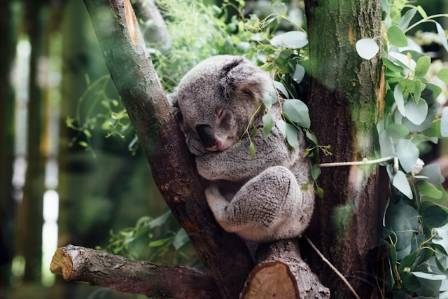
With their fluffy grey fur, large round ears, and endearing habit of clinging to eucalyptus trees, koalas (Phascolarctos cinereus) have captured the hearts of people worldwide, becoming one of Australia’s most iconic wildlife symbols. These gentle marsupials draw millions of tourists to the continent each year, their presence synonymous with the rugged beauty of Australia’s bushland. Yet behind their cuddly appearance lies a species grappling with unprecedented threats: habitat loss, climate change, disease, and human-wildlife conflict have pushed koalas to the brink of crisis. In 2025, the IUCN Red List classifies them as Vulnerable, while they are listed as Endangered in Queensland, New South Wales, and the Australian Capital Territory under national law. The International Fund for Animal Welfare (IFAW) and its partners have been at the forefront of efforts to protect koalas, from rehabilitating injured individuals to restoring their habitats and advocating for stronger conservation policies. This exploration delves into the fascinating biology of koalas—dispelling myths, uncovering their unique adaptations—and examines the urgent challenges they face, as well as the collective action needed to ensure their survival for generations to come.
Taxonomy and Physical Traits: Beyond the “Koala Bear” Myth
One of the most persistent misconceptions about koalas is that they are bears—a label coined by early European settlers who were struck by their bear-like appearance. In reality, koalas are marsupials, belonging to the unique family Phascolarctidae (derived from the Greek words for “pouched bear”), making them distant relatives of kangaroos, wombats, and opossums, not bears. Their physical adaptations are perfectly suited to their arboreal lifestyle: they have large, sharp claws and opposable thumbs on both front and hind paws, providing an iron grip for climbing eucalyptus trees. Their fur, often mistaken for soft and fluffy, is actually coarse like sheep’s wool, with a water-resistant outer layer that protects them from rain and extreme temperatures. Fur color varies by region—Queensland koalas are lighter grey with shorter fur, while those in Victoria and South Australia have darker, thicker coats to withstand cooler climates. Adult males are larger than females, weighing up to 14 kilograms (30 pounds) compared to females’ maximum of 10 kilograms (22 pounds), and sport larger heads, broader noses, and prominent pink scent glands on their chests used for marking territory. Koalas also have distinctive hairless noses and paw pads, which enhance their sense of smell and grip, respectively, while their large, round ears aid in thermoregulation and detecting predators.
Life Cycle: From Tiny Joey to Independent Adult
The koala’s life cycle is a marvel of marsupial adaptation, beginning with one of the shortest gestation periods of any mammal. Female koalas are pregnant for just 34 to 36 days before giving birth to a single joey (twins are extremely rare) that weighs less than 1 gram (0.035 ounces)—smaller than a jellybean. The blind, hairless joey crawls instinctively into its mother’s pouch, a specialized structure with a central opening sealed by a strong sphincter muscle (unlike kangaroos’ upward-opening pouches), which keeps the joey safe during tree-climbing. For the next five months, the joey feeds exclusively on its mother’s milk, growing rapidly thanks to the high-protein, nutrient-rich formula produced by specialized glands. At around five months old, the joey begins to peek out of the pouch, gradually transitioning to a diet of “pap”—a soft, sticky substance secreted by the mother’s digestive system that contains live bacteria essential for breaking down eucalyptus leaves, the koala’s primary food source. This pap inoculates the joey’s gut with the microbiome needed to digest the toxic compounds in eucalyptus, a critical adaptation for survival. After leaving the pouch permanently at around seven months, the joey rides on its mother’s back for another three to four months, learning to climb trees, identify edible eucalyptus species, and avoid dangers before becoming fully independent at 12 months old. Female koalas typically breed once a year, with a lifespan of up to 18 years in the wild, while males have shorter lifespans due to competition and environmental stress.
Diet and Digestive Adaptations: The Eucalyptus Specialists
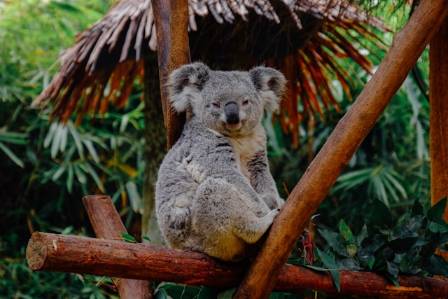
Koalas are among the few animals on Earth that can survive on a diet consisting almost exclusively of eucalyptus leaves—a food source that is toxic to most other mammals. This unique adaptation is rooted in their specialized digestive system: their gut contains a large cecum (a pouch-like organ) housing billions of bacteria that break down the cellulose and toxic compounds (such as terpenes and phenols) in eucalyptus. To compensate for the low nutritional value of eucalyptus, koalas have evolved several energy-saving strategies: they sleep or rest for 18 to 22 hours a day, moving slowly and conserving energy whenever possible. They also select their food carefully, choosing from around 30 of the 600+ eucalyptus species native to Australia, favoring those with higher moisture and nutrient content and lower toxin levels. Unlike many mammals, koalas do not drink water regularly—they obtain most of their hydration from the moisture in eucalyptus leaves, only seeking out water during droughts or heatwaves. This reliance on eucalyptus makes koalas extremely vulnerable to habitat loss, as the destruction of eucalyptus forests deprives them of both food and shelter. Additionally, climate change is altering the nutritional quality of eucalyptus leaves: rising CO2 levels reduce the protein content and increase the concentration of toxins, putting koalas at risk of malnutrition and starvation.
Population Status and Key Threats: A Species in Decline
Once numbering in the millions across Australia, koala populations have plummeted in recent decades, with precise counts difficult to obtain due to their elusive nature and wide distribution. In Queensland and New South Wales, populations have declined by up to 50% since 2000, while in Victoria and South Australia, where koalas were once more abundant, they face growing threats. The primary driver of this decline is habitat loss: land clearing for agriculture, urbanization, and logging has destroyed over 80% of their original habitat, fragmenting forests and forcing koalas into smaller, isolated areas. This fragmentation increases their exposure to human-related dangers, including vehicle collisions (thousands of koalas are hit by cars each year) and attacks by domestic dogs. Climate change exacerbates these threats: hotter, drier conditions increase the frequency and intensity of bushfires (such as the 2019–2020 Black Summer fires, which killed or displaced an estimated 60,000 koalas), reduce eucalyptus leaf moisture, and expand the range of diseases. Chlamydia, a sexually transmitted bacterial infection, is a major health crisis for koalas, causing blindness, infertility, and death in up to 50% of individuals. Weak environmental laws in Australia have failed to adequately protect koala habitats, allowing destructive practices to continue despite the species’ declining status.
IFAW’s Conservation Efforts: Protecting Koalas at Every Stage
The International Fund for Animal Welfare (IFAW) has been a leader in koala conservation for decades, implementing a multifaceted approach to protect and recover koala populations. In the aftermath of the Black Summer bushfires, IFAW partnered with local organizations to restore critical habitats, planting thousands of eucalyptus trees and creating wildlife corridors that connect fragmented forests—essential for koalas to move, find mates, and access food and water. The Koala Climate Corridors project, developed with partners like the Great Eastern Ranges, aims to build climate-resilient habitats that allow koalas and other native species to adapt to changing environmental conditions. IFAW also supports frontline rescue and rehabilitation efforts: working with sanctuaries like Friends of the Koala and Mosswood Wildlife, the organization provides funding for veterinary care, orphaned joey formula, and soft release sites where rehabilitated koalas can acclimate to the wild before being released. A groundbreaking initiative involves the use of detection dogs, such as IFAW–UniSC’s Bear, trained to locate koalas in dense bushland—this allows researchers to monitor population health, collect genetic data, and rescue injured or stranded individuals. IFAW is also investing in research to develop a chlamydia vaccine, a potential game-changer for reducing koala mortality. Additionally, the organization advocates for stronger environmental laws, launching petitions and lobbying the Australian government to end habitat destruction and establish legal protections for koala habitats.
Common Questions About Koalas: Dispelling Myths and Sharing Facts
Despite their popularity, koalas are surrounded by misconceptions—here are answers to some of the most frequently asked questions. Are koalas friendly? While they look cuddly, koalas are wild animals and can become aggressive if threatened or stressed, using their sharp claws and teeth to defend themselves. They should never be approached in the wild unless they are injured or in distress. How long do koalas live? In the wild, females typically live 10–18 years, while males live 8–12 years, with lifespan heavily influenced by habitat quality and threats like disease. Are koalas endangered? While classified as Vulnerable globally, they are Endangered in three Australian states/territories due to severe population declines. Do koalas have pouches? Yes—their unique central-opening pouches protect joeys during the early stages of development. How many joeys do koalas have? Usually one per year, with twins occurring in less than 1% of births. These facts highlight the koala’s unique biology and the importance of respecting their wild nature while supporting conservation efforts.
How You Can Help: Individual Actions for Collective Impact
Protecting koalas requires collective action, and every individual can contribute to their survival. If you live in Australia, plant native eucalyptus trees in your yard to provide food and shelter, keep domestic dogs on leashes near bushland, and drive carefully in koala habitats (especially at dawn and dusk when they are most active). Download IFAW’s Wildlife Rescue App to report injured or distressed koalas to local authorities—timely intervention can save lives. Globally, you can support IFAW’s work by donating to their koala conservation programs, signing petitions calling for stronger environmental laws, and raising awareness on social media about the threats koalas face. For those in Victoria, sign IFAW’s petition demanding a parliamentary inquiry into the koala welfare crisis driven by habitat destruction. By supporting conservation organizations, advocating for policy change, and making sustainable choices, we can all play a role in ensuring that koalas continue to thrive in Australia’s bushland for years to come.
Conclusion: Saving Australia’s Icon—A Race Against Time
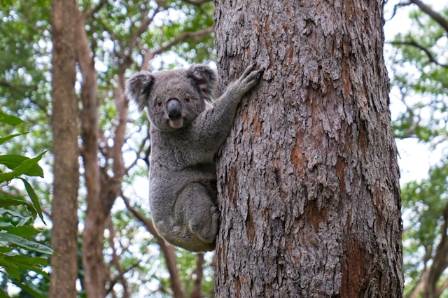
Koalas are more than just cute animals—they are keystone species in Australia’s ecosystems, playing a vital role in seed dispersal and maintaining the health of eucalyptus forests. Their decline is a stark reminder of the impact of human activity on wildlife, but it is not too late to reverse course. Through scientific research, habitat restoration, rescue efforts, and policy advocacy, organizations like IFAW are working tirelessly to protect koalas, but they cannot do it alone. The survival of koalas depends on global awareness, political will, and individual action—from planting a tree to lobbying governments, every effort counts. As we marvel at the koala’s unique adaptations and gentle nature, we must also recognize our responsibility to protect them. By standing up for koalas, we are not just saving a single species—we are preserving the biodiversity and natural heritage of Australia for future generations. The time to act is now, before this iconic marsupial fades from the bushland forever.