Introduction: More Than a Pastry—A Symbol of Hong Kong’s Soul
In the bustling streets of Hong Kong, where neon signs glow beside traditional shophouses and the aroma of dim sum mingles with coffee, one pastry stands out as a universal comfort: the egg tart (蛋撻;daan6 taat1). Crisp, buttery, and filled with a silky, eggy custard, it’s a staple in bakeries, dim sum restaurants, and cha chaan tengs (茶餐厅), beloved by locals from all walks of life and sought after by tourists eager to taste a piece of Hong Kong’s culinary identity. Since its arrival in the late 1940s, the egg tart has transcended its status as a simple dessert to become a cultural icon—a sweet testament to Hong Kong’s unique history of East-West fusion, post-war resilience, and everyday joy. It’s not just a pastry; it’s a story told through flaky crusts and creamy fillings, a reflection of a city that has always blended tradition with innovation. To bite into a Hong Kong egg tart is to taste the layers of its past: colonial influence, local ingenuity, and the warmth of community. In this deep dive, we’ll explore how this humble treat evolved from a colonial import to a beloved symbol of Hong Kong, uncovering its tangled origins, regional cousins, rise to popularity, and enduring legacy in a city that’s constantly changing.
The Egg Tart and Its Kin: A Tale of Two Tarts
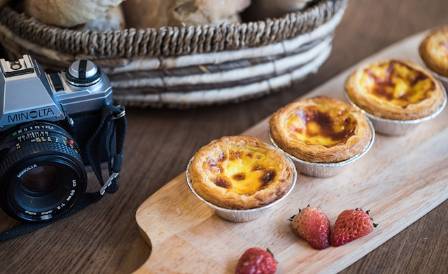
The Hong Kong egg tart is instantly recognizable: a golden, flaky crust cradling a smooth, slightly jiggly custard that strikes the perfect balance between sweet and eggy. But its simplicity masks subtle variations that spark friendly debates among locals—and distinguish it from its famous cousin, the Macanese pastel de nata. Hong Kong egg tarts typically come in two crust styles: the most common is a flaky puff pastry (酥皮;sou1 pei4), layered with lard or vegetable shortening to achieve a delicate, shatter-at-the-touch texture with dozens of thin layers. The other is a rich, crumbly shortbread crust (曲奇皮;kuk1 kei4 pei4), a nod to the pastry’s Western roots, made with butter for a buttery, cookie-like base. Locals often debate which is superior—flaky for its lightness, shortbread for its richness—but both share the same goal: to complement, not overpower, the custard filling. Unlike many Western tarts, Hong Kong egg tarts rarely use cream; the custard is made with eggs, milk, sugar, and a touch of vanilla, resulting in a brighter, more delicate flavor that’s less heavy than its European counterparts.
Its closest relative, the Macanese egg tart (葡式蛋挞;pou4 sik1 daan6 taat1), owes its existence to Portugal’s colonial history in Macau. Inspired by the Portuguese pastel de nata, it features a crisp filo-like crust (often made with butter and sugar) and a custard that’s richer, creamier, and topped with a caramelized, torched surface that adds a smoky sweetness. The Macanese tart gained pan-Asian fame in 1999 when KFC acquired the recipe and began selling it in its outlets across the region, introducing millions to its indulgent flavor. For purists, Lord Stow’s Bakery—founded in 1989 in Coloane Village by British pharmacist Andrew Stow, who adapted the original Portuguese recipe for local tastes—remains the gold standard for authentic Macanese egg tarts. While the Hong Kong and Macanese versions share a common ancestor, they’ve evolved to reflect their respective cultures: Hong Kong’s is simpler, more accessible, and deeply rooted in local ingredients, while Macau’s leans into European richness with a tropical twist.
The Century’s Greatest Fusion: How Colonial History Birthed a Icon
Hong Kong’s egg tart is a product of fusion—one of the most delicious examples of how the city’s colonial past shaped its cuisine. The story begins in the 19th century, when Guangzhou (then Canton) was China’s only port open to foreign trade. British merchants and sailors brought with them their culinary traditions, including the English custard tart: a shortbread crust filled with a creamy mixture of eggs, cream, and sugar, popular in British bakeries and royal courts (legend has it, Henry VIII was a fan). But as these Westerners settled in Guangzhou, they faced a problem: local palates preferred bold, savory flavors, and ingredients like butter and heavy cream were scarce and expensive. Enter Chinese chefs, who watched their Western counterparts and set about adapting the recipe to fit local tastes, ingredients, and budgets.
The result was a masterclass in culinary ingenuity. Butter—hard to find and costly—was replaced with lard (a staple in Chinese cooking, used in dishes like char siu bao and mooncakes), which gave the crust its signature flakiness and a subtle porky aroma that resonated with local diners. Cream was swapped for milk, which was more readily available, and the custard was lightened to emphasize the natural sweetness of eggs, drawing inspiration from Chinese steamed egg dishes (蒸水蛋;zing1 seoi2 daan6), a beloved comfort food across southern China. There are competing origin stories about who exactly invented this adapted tart: some credit Chinese chefs in Guangzhou’s Western restaurants for modifying the recipe in the 1920s; others point to weekly cooking competitions hosted by Western stores in Guangzhou, where adapted egg tarts emerged as a crowd favorite; still more claim a Guangzhou restaurant first replaced the English shortbread crust with flaky pastry, aligning it with local dim sum traditions. Regardless of the exact origin, the egg tart was born from necessity and creativity—a fusion of Western form and Eastern flavor that perfectly encapsulated the cross-cultural exchange of the era.
By the 1940s, the egg tart had made its way to Hong Kong, carried by immigrants from Guangzhou and British expats. Initially, it was a luxury item, served in high-end Western restaurants and enjoyed by the city’s elite—businessmen, colonial officials, and wealthy families. But the post-WWII era would change everything. As British influence weakened and Hong Kong emerged as a bustling hub of trade and manufacturing, the city’s social fabric shifted. Workers needed affordable, quick meals, and cha chaan tengs (茶餐厅) and bing sutt (冰室)—casual eateries that blended Western and Chinese cuisine—became the heart of daily life. These establishments democratized the egg tart, making it accessible to everyone: factory workers grabbing a breakfast on the go, students studying over a snack, families sharing a treat after dinner. The egg tart’s rise mirrored Hong Kong’s own transformation—from a colonial outpost to a city of the people, where luxury was reimagined as everyday comfort.
An Oldie but a Goldie: Tai Cheong Bakery and the Legacy of “Fat Pang Tarts”
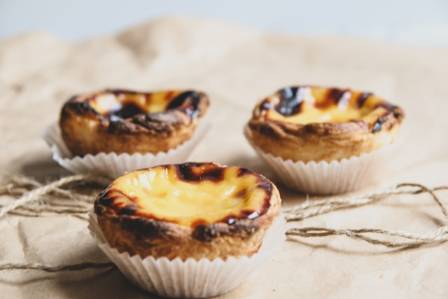
While the egg tart became a ubiquitous treat across Hong Kong, one bakery elevated it to legendary status: Tai Cheong Bakery (泰昌餅家), founded in 1954 on Lyndhurst Terrace in Central. What set Tai Cheong apart was its choice of crust—instead of the lard-based flaky pastry favored by most bakeries, Tai Cheong opted for a buttery shortbread crust, a nod to the egg tart’s Western origins, but with a uniquely rich, crumbly texture that paired perfectly with its smooth custard. The bakery’s fame skyrocketed in the 1990s, thanks to a famous patron: Chris Patten, the last governor of colonial Hong Kong. Patten was such a fan that he reportedly visited Tai Cheong regularly, earning the bakery’s egg tarts the nickname “Fat Pang Egg Tarts” (肥彭蛋撻;fei4 paang4 daan6 taat1)—a playful reference to Patten’s nickname among locals. This royal seal of approval turned Tai Cheong into a must-visit destination for tourists and locals alike, cementing its reputation as the “godfather of Hong Kong egg tarts.”
Tai Cheong’s journey hasn’t been without challenges. During the 2008 global financial crisis, rising rent in Central threatened to close the original shop. But loyal customers—many of whom had grown up eating Tai Cheong’s tarts—rallied to support it, launching campaigns and signing petitions to save the iconic bakery. With their help, Tai Cheong relocated to a nearby spot on Wellington Street and later expanded to multiple outlets across Hong Kong, including in airports and shopping malls. Today, the original Lyndhurst Terrace location (now reopened) remains a cult favorite, with long lines snaking down the street as people wait to taste the famous shortbread-crusted tart. What makes Tai Cheong’s egg tart so special? It’s the attention to detail: the crust is baked to a golden crisp, with a buttery flavor that’s not too sweet; the custard is silky and eggy, with just the right amount of sweetness to balance the crust. It’s a reminder of the egg tart’s core appeal—simplicity done perfectly.
Always and Forever: The Egg Tart’s Modern Reinvention
Nearly a century after it first arrived in Hong Kong, the egg tart shows no signs of fading away—in fact, it’s evolving, adapting to modern tastes while retaining its classic charm. Today, you’ll find egg tarts in every corner of the city, from hole-in-the-wall bakeries to Michelin-starred dim sum restaurants, but the most exciting developments are in the realm of innovation. Traditional bakeries like Tai Cheong have expanded their offerings to include flavor twists inspired by global trends: matcha egg tarts (infused with Japanese green tea powder, giving the custard a vibrant green hue and earthy flavor), chocolate egg tarts (with a rich cocoa custard), and purple sweet potato egg tarts (a nod to Chinese desserts, with a naturally sweet, vibrant filling). More avant-garde versions have emerged too: salted egg yolk lava egg tarts (with a runny salted egg yolk center), cheese egg tarts (topped with a layer of baked cheese), and even mini egg tarts (perfect for snacking on the go).
The egg tart has also become a social media sensation, with food bloggers and influencers sharing photos of perfectly golden tarts, close-ups of their flaky crusts, and videos of the custard oozing out when bitten into. It’s a must-try for tourists, who often include “eat a Hong Kong egg tart” on their itineraries, and has spawned a range of merchandise—stickers, keychains, phone cases—featuring its iconic shape. But beyond trends and merchandise, the egg tart’s enduring popularity lies in its ability to connect people to their roots. For older Hongkongers, it’s a taste of childhood, a reminder of simpler times spent in cha chaan tengs with family. For younger generations, it’s a link to the city’s history, a way to engage with their cultural heritage while embracing new flavors. It’s also a symbol of Hong Kong’s resilience—through economic crises, social changes, and global pandemics, the egg tart has remained a constant, a comfort that brings people together.
Conclusion: A Pastry That Tells Hong Kong’s Story
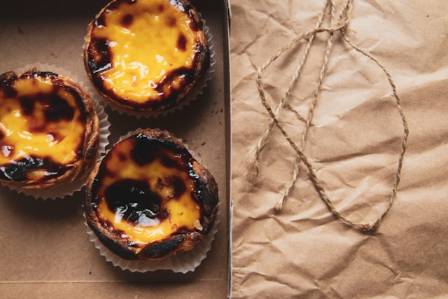
The Hong Kong egg tart is more than just a dessert. It’s a living piece of history, a testament to the city’s ability to blend cultures, adapt to change, and find joy in the simple things. From its origins as a colonial import adapted by Chinese chefs to its rise as a democratic comfort food in post-war cha chaan tengs, from Tai Cheong’s legendary shortbread crust to modern matcha and lava variations, the egg tart has evolved with Hong Kong, reflecting its triumphs, challenges, and unique identity. It’s a pastry that bridges divides—rich and poor, East and West, old and young—uniting people over a shared love of flaky crusts and creamy custard. As Hong Kong continues to change and grow, the egg tart will undoubtedly remain a beloved symbol, a sweet reminder of where the city has been and a delicious promise of where it’s going. Whether you’re a local grabbing a tart on your way to work or a tourist savoring your first bite, the Hong Kong egg tart isn’t just food—it’s a piece of the city’s soul, wrapped in golden crust.